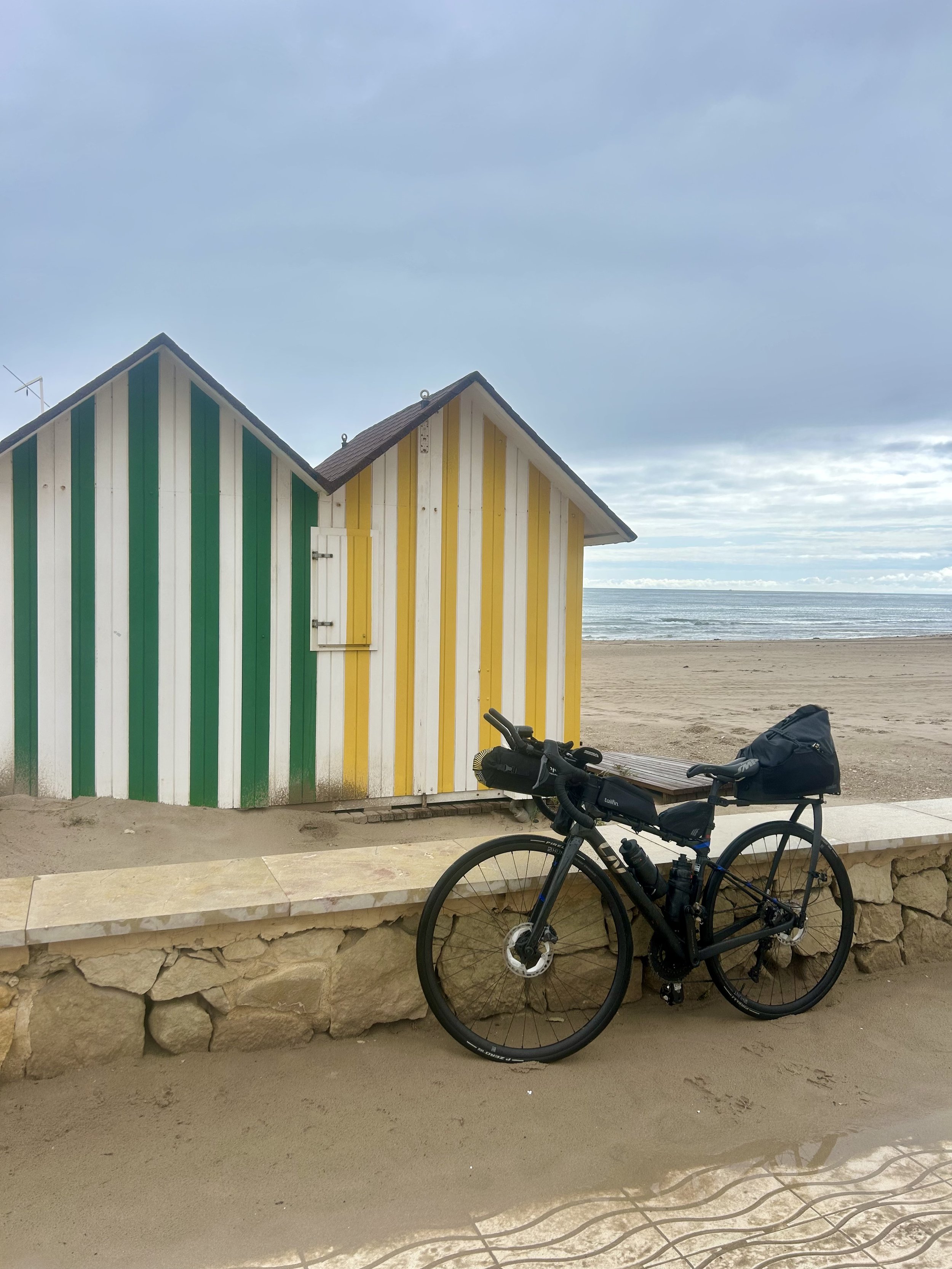
The wind is a strong easterly. I'm riding straight into it. For what feels like the 100th time today, I settle, with resignation, onto my aerobars. Every so often the wind catches the hollow insides of the tubes, and they let out an eerie half-whistle. An empty beer bottle played hopelessly by a stumbling drunk.
It is the appropriate theme tune for my ride.
I nudge up the volume on my headphones. No use. The music distorts and they vibrate uncomfortably when the sound is too high. I flick them off again and sink lower, eyeing the tarmac stretching ahead. I wobble as the air from a passing lorry first sucks me towards it, then spits me out again. There are no free rides today.
Optimism alone is not enough
On this recent 500k ride along the Spanish coast from Altea to Barcelona, I made multiple mistakes — meaning that, whilst it was an adventure, it wasn't the experience I had hoped for. Perhaps that's the key. You can't "hope" your way through this sort of trip; you need to plan, review, and switch off your optimism bias.
Route planning apps are so efficient these days — plug in a departure and a destination and you have a reliable route in seconds. When racing, I study the route in advance. This trip, though, was a way to test some new kit and get miles in my legs ahead of a race in May. It was a simple A to B route along what I imagined would be pretty, coastal roads with some historic cities thrown in. So I just didn't bother checking. I let my biases do their thing. And while I achieved my aim, boy, was it a joyless slog.
But the whole experience reminded me that motivation rarely creates momentum — it's usually the other way around. We often procrastinate, waiting for motivation to arrive, but this trip was a lesson in doing the absolute opposite.
Just start and see
Day one was fine. Day two was grim. I made an early morning mistake. Riding through narrow vineyard roads, I met a broken irrigation pipe. The road ahead was impassable - covered in fast-flowing water for fifty metres. Enough of a torrent to soak my shoes if I stopped to push, but no obvious alternative without a long detour. So I just rode. It worked for a second, and then I felt the back tyre lose grip. I swayed comically from side to side, then skidded, falling heavily as the bike went out from under me in the opposite direction. Soaking shoes after all. And soaking shorts, gloves and jacket. I was lucky not to hurt myself or damage the bike. It was not a good moment for morale.
Over the next two days, multiple factors made me want to give up: headwind, fatigue, busy roads, and relatively uninspiring scenery.
By the third morning I was completely over it. I woke to grey skies and more wind. 180k left to Barcelona. This town had a station — I would shove my bike on a train and ditch the last leg. But as I started to pack up my kit, a nagging voice piped up:
Why don't you just start and see?
I love this self-trickery: yes, yes — just start and see how you feel. You can get a train from the next town. Nobody cares. Nobody will know. You said you'd only keep going for as long as it's fun anyway.
I use this mantra a lot in sport, but it was only really on this trip that it struck me how useful it is in daily life too.
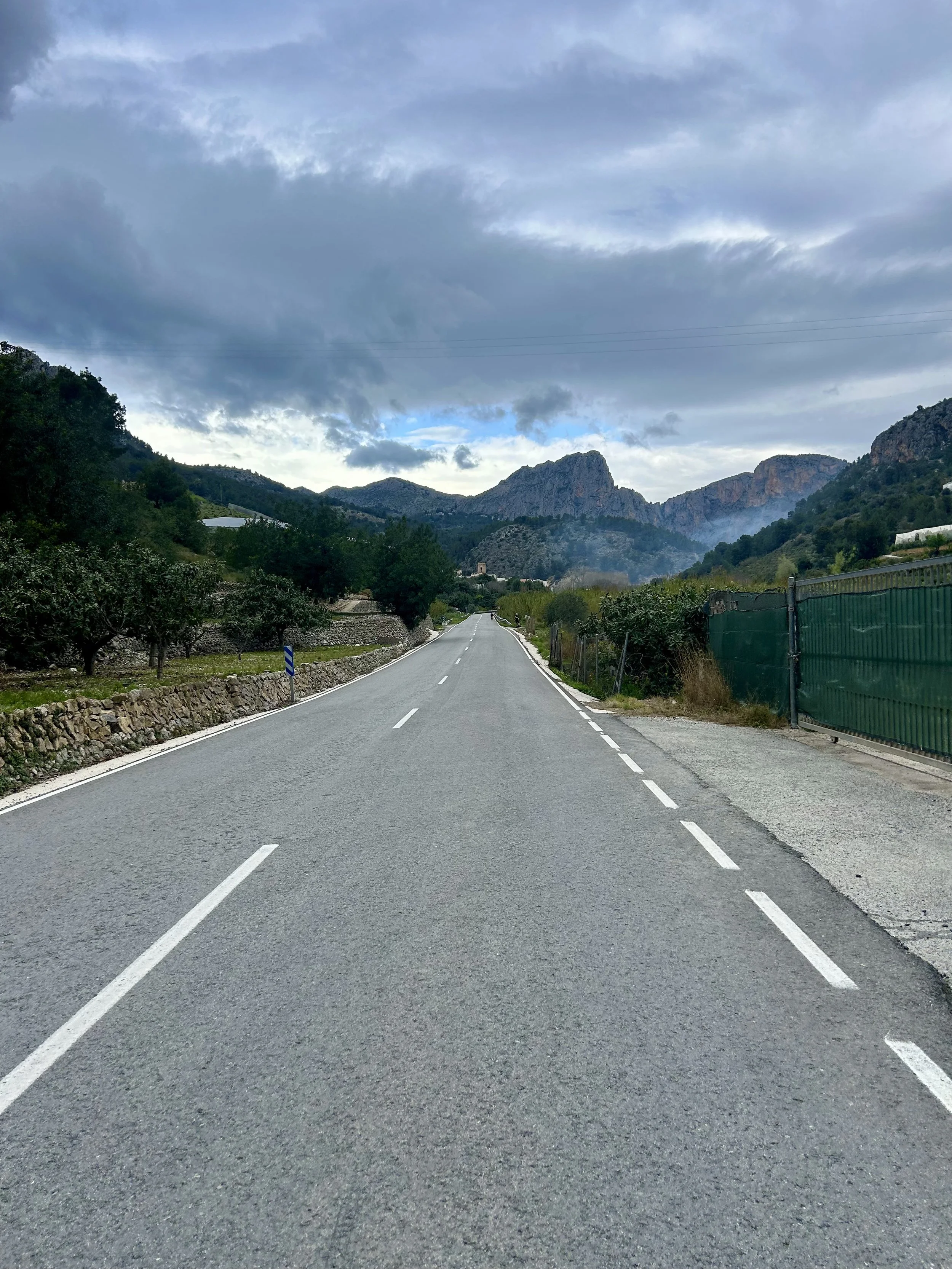
Endless Spanish tarmac
The effort-motivation loop
How often do you find yourself saying "I don't feel like it" or "I'm not in the mood"?
This comes up a lot for my coaching clients, who often wait to feel ready, motivated, or clear before taking action.
It's also a common refrain for me, particularly around training. I love sport and everything it brings — the social side, nature, fitness, strength — but I often don’t actually feel like training. I just know I'll regret it if I don't. And that I never regret it if I do. So I just start and see. And there is a firm scientific basis for this approach.
We used to think dopamine was simply the brain's pleasure signal — released at the moment of reward. Whilst still widely referenced, this story is incomplete. Later research suggests that dopamine is a response not just to pleasure itself, but to the anticipation of it, and to the willingness to strive for it[1]. Furthermore, this anticipation can produce a stronger dopamine spike than the actual achievement[2] — and -even better - uncertain outcomes can motivate us more than guaranteed ones.
Effort itself also amplifies the signal. When we act — even reluctantly — the brain creates a positive association between behaviour and reward, making us more likely to repeat the behaviour. Having a sense of control and autonomy strengthens the signals even further, and another bonus is that recognition or improvement in status has a similar dopamine response to physical rewards. I’m looking at you Strava kudos!
The loop is self-perpetuating: effort generates the neurochemical signals that sustain motivation, and the pleasure of achievement keeps us going.
What are you waiting to feel ready for?
So no, this last trip wasn't especially fulfilling — but I got it done. Not in the way that Instagram might have you believe - by leaping out of bed, and riding through stunning scenery into fabulous sunsets - but by just starting and seeing. By breaking things down and finding the moments that did inspire me: a flock of black ibis, a shortcut to a hidden beach that begged me to stop and swim; a hoopoe brandishing his majestic crest, as proud as a newly crowned prince.
I also learnt a useful lesson for the next race: when I’m feeling rough and dreading the long day ahead, I will just start and see. That first momentum will kickstart my motivation, and there will always be something around the next corner to keep me going: the welcome glimmer of an early-morning bakery; fireflies dancing in the beam of my lights; and once, just the tips of a hare’s ears above the wheat, still in the morning mist.
What are you waiting to feel ready for?
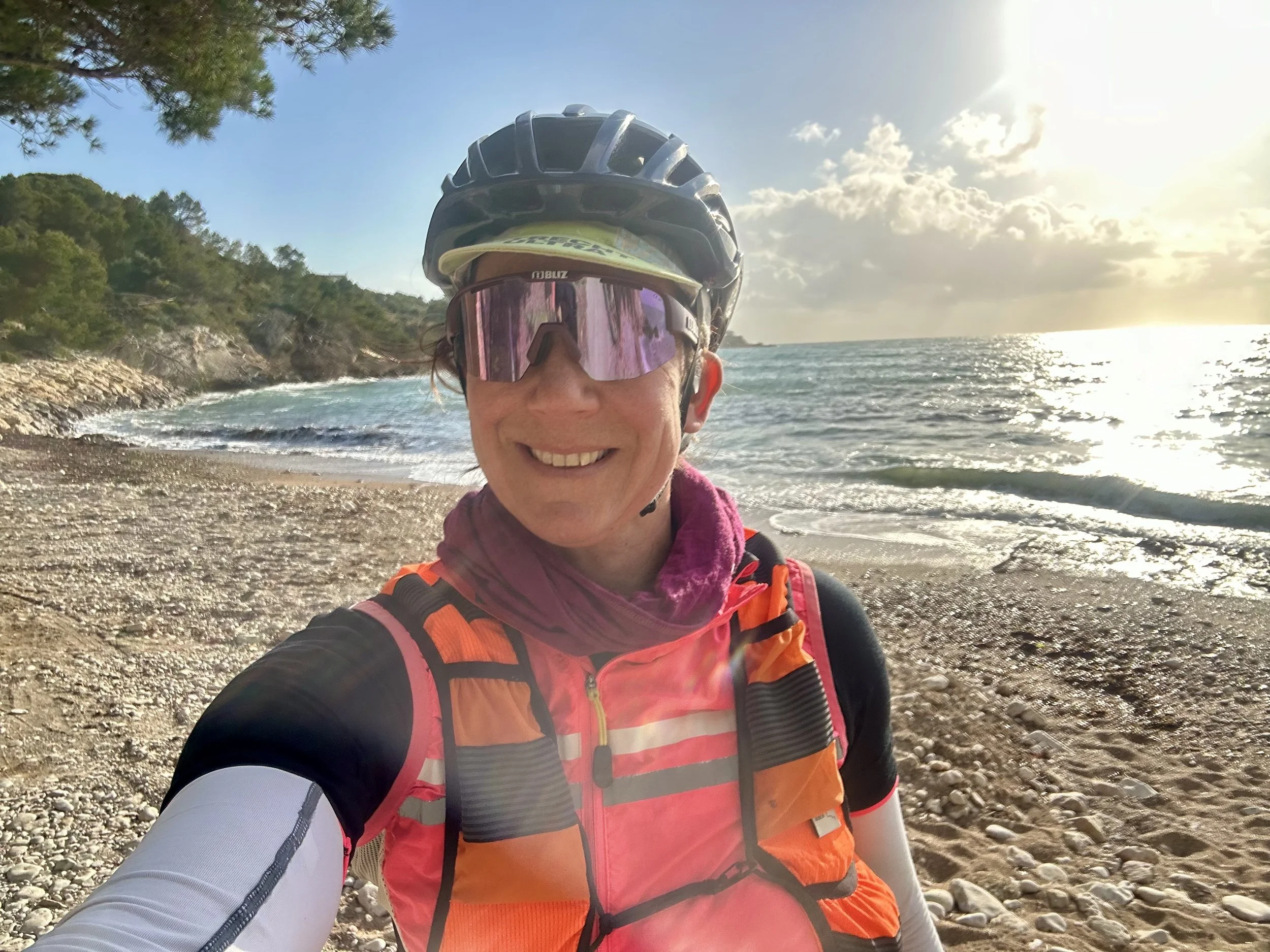
Finding a hidden beach (then an 18% hill to exit it again)
[1] Berridge, K. C., & Robinson, T. E. (1998). What is the role of dopamine in reward: hedonic impact, reward learning, or incentive salience? Brain Research Reviews, 28(3), 309–369
[2] Knutson, B., Adams, C. M., Fong, G. W., & Hommer, D. (2001). Anticipation of increasing monetary reward selectively recruits nucleus accumbens. Journal of Neuroscience, 21(16), RC159.